
Story | Energy-intensive industries
2,000 km away — against a deadline that leaves no room for error.
How do you build a multi-megawatt industrial heat generation plant when the location is too remote — or the schedule too tight — for a conventional approach?
The story
In strategically important industries, the challenge is often not only what needs to be built. The real question is how to build it when project conditions leave no room for error.
When clients need a multi-MW industrial heat generation plant for hot water and industrial steam, the technical scope is only one part of the challenge. Tight schedules, demanding site conditions, complex logistics, and strict regulatory requirements can quickly turn a conventional construction approach into a project risk.
In such projects, the right execution strategy is everything. Waiting for all civil works to be completed before starting mechanical installation can create too much uncertainty. On remote or difficult-to-access sites, even a missing component, tool, consumable, or incorrectly prepared element can cause significant delays. That is why modularisation, prefabrication, and detailed planning are key to reliable project execution.
Our response is to move as much work as possible away from the site and into a controlled workshop environment. Based on the received project documentation, we adapt the execution logic for modular construction and reduce project risks before they reach the construction site. In practice, this means reassessing both mechanical and electrical disciplines: system interfaces, piping routes, skid layouts, OEM components, transport requirements, installation sequences, documentation requirements, and site constraints.
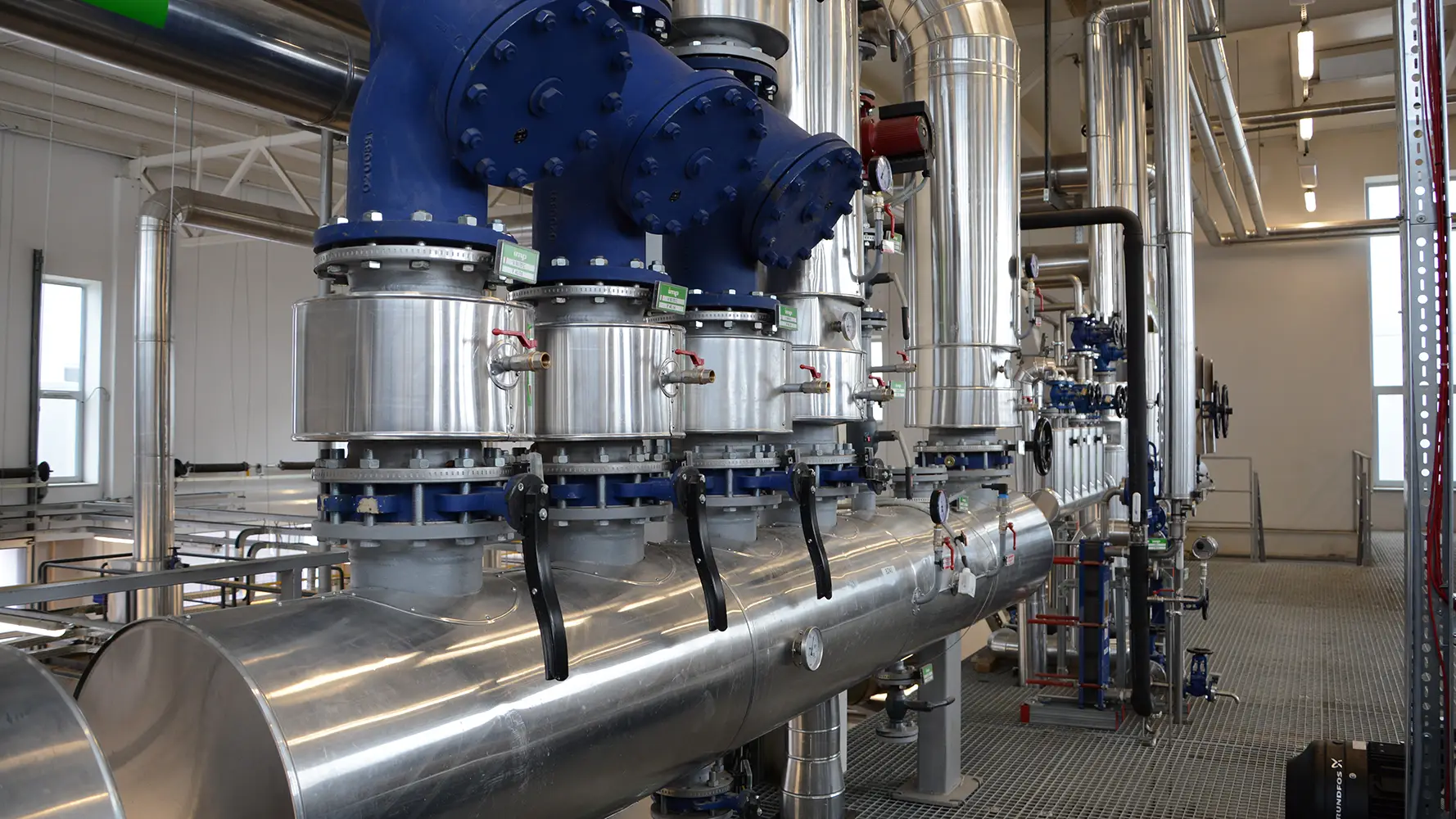
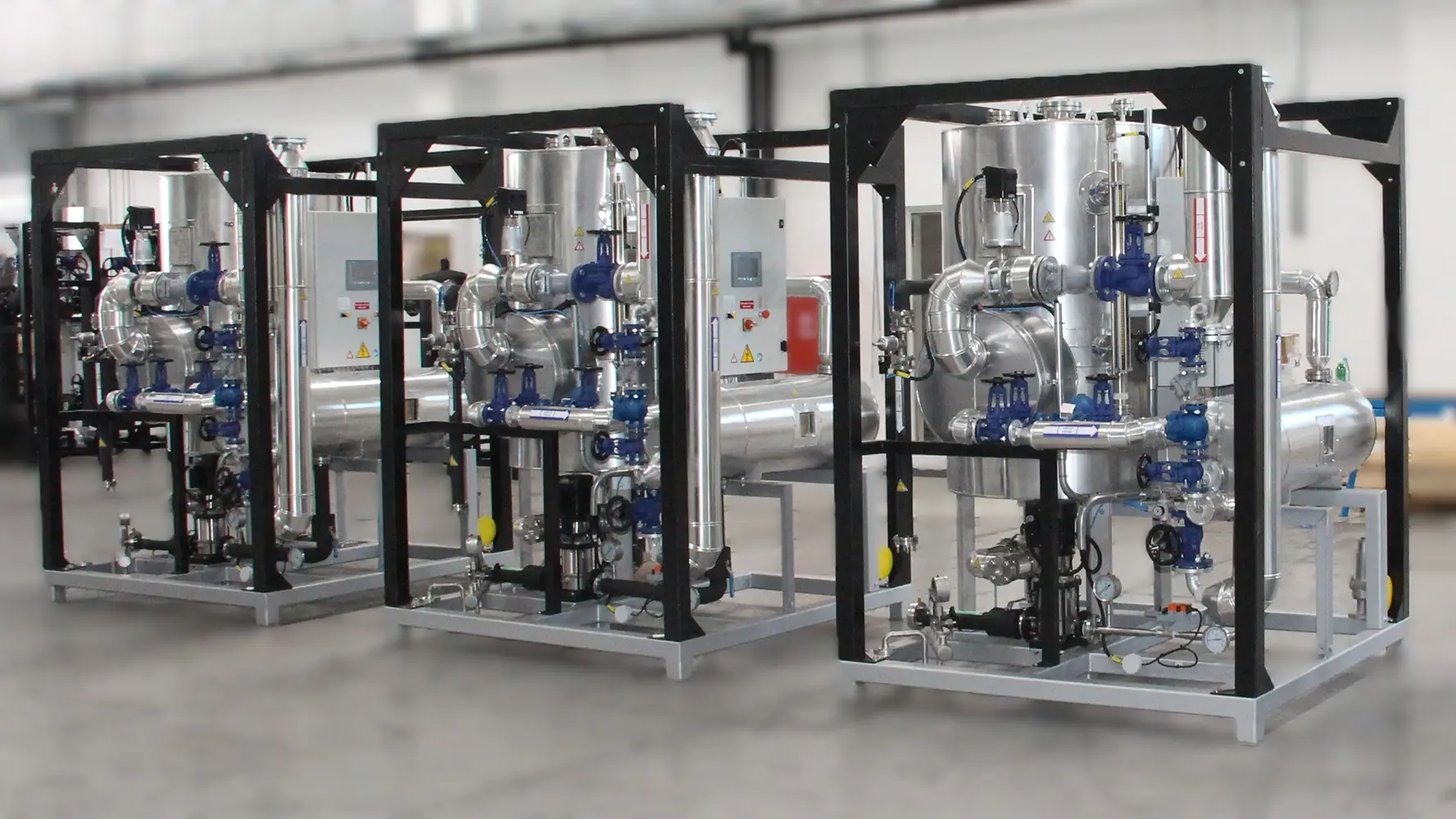
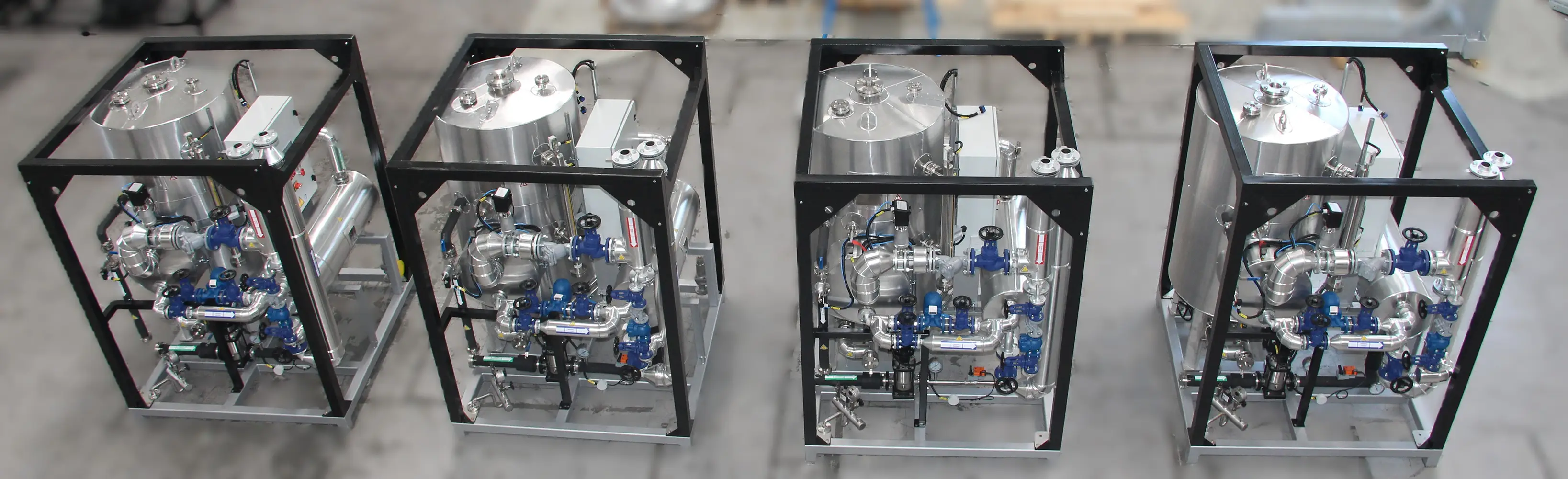
The result — proven across multiple successful projects — is an execution concept based on prefabricated modules, piping skids, and spools. While site activities can continue uninterrupted, fabrication, assembly, and quality control are already taking place in our workshops. In one such execution, more than 40 piping skids were manufactured, delivered, installed, and commissioned at a remote location more than 2,000 km from our headquarters in Ljubljana.
Each module had to be prepared not only for fabrication, but also for transport, installation, commissioning, future operation, and practical site execution. This included careful planning of interfaces, required tools, installation materials, and consumables needed for reliable installation in an unpredictable environment.
This is how we work: integrated, practical, and risk-aware. Modular construction is not only about building in a workshop. It is about reducing uncertainty. More work is completed in a controlled environment, fewer unknowns remain for the site, and critical issues are resolved before shipment — not during installation.
The challenges
- Tight execution schedule
- Remote project location
- More than 40 piping skids
- Strict PED compliance
Our solutions
- Detailed design adapted for modular execution
- Prefabrication of piping skids and spools
- Detailed project planning and risk analysis
- Installation and commissioning with our own team
Lessons learned
When the site is remote or the schedule is tight, project risk must be moved from the construction site into a controlled fabrication environment.
Client impact
A multi-MW industrial heat generation plant was successfully delivered through modular execution, coordinated logistics, detailed project planning, and documentation aligned with European pressure equipment requirements.